
Glass Oak Barrels: Design, Features and Buying Guide
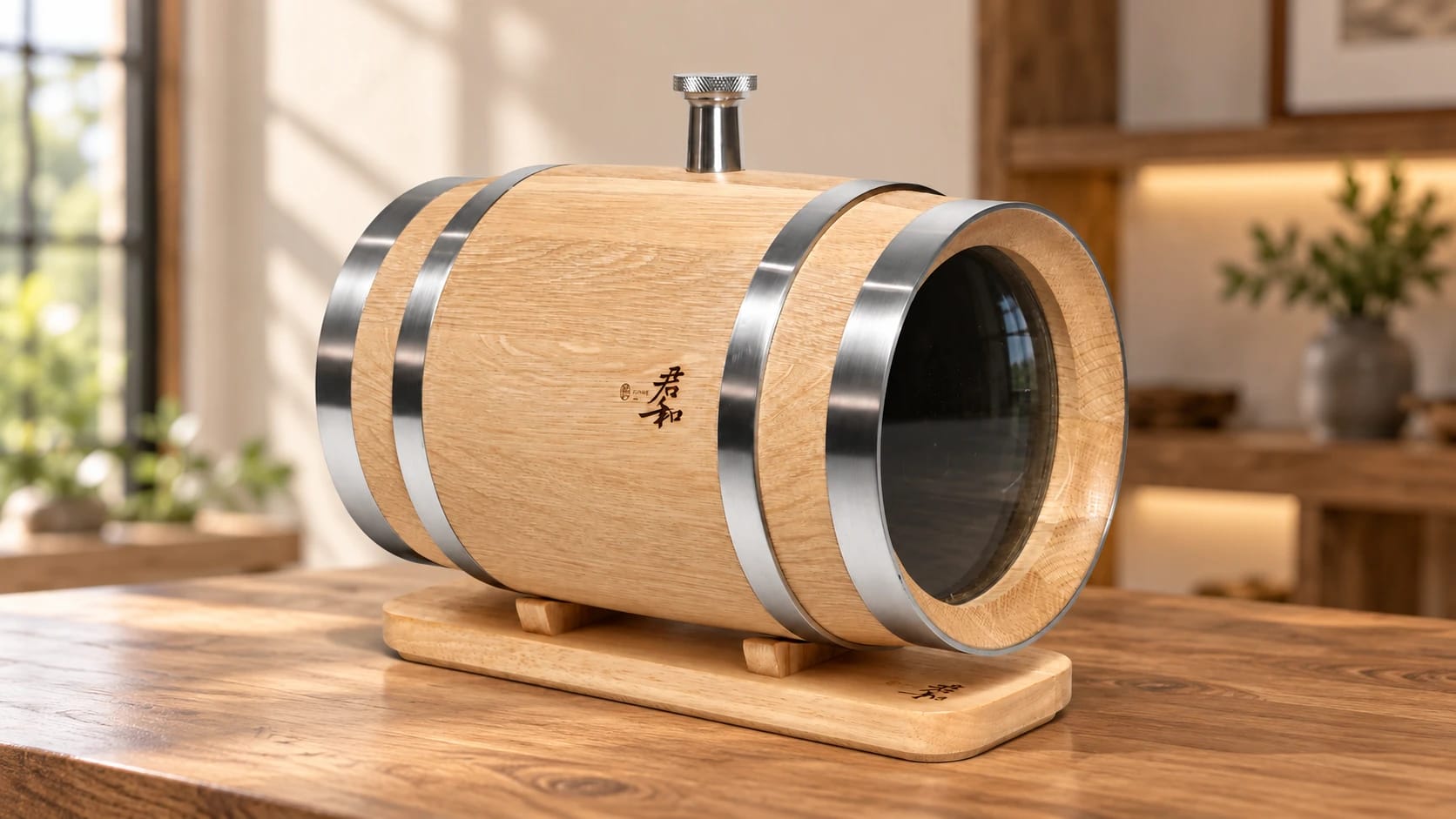
A glass oak barrel combines an oak body with a transparent view into its contents. It has a different construction from a glass container shaped like a barrel: the wood, glass and metal each occupy a distinct part of the assembly.
For a buyer, that difference matters. A photograph can show an attractive display piece without explaining the panel arrangement, interior treatment or included fittings. Understanding those details makes it easier to choose a mini barrel for a tasting room, a gift collection or an individual spirits project.
Identify the oak, glass and metal components
The Junhe 3L Mini Oak Barrel is offered in American white oak or Mongolian oak. The curved wooden body gives the barrel its depth, while glass panels provide a view through the ends. The oak remains part of the vessel; the panels do not turn it into an all-glass container.
The specification also lists 304 stainless steel bands. These form a visible part of the assembly around the wooden body. A wooden base supports the barrel and contributes to its overall footprint.
When reviewing photographs, identify the body, end panels, bands, opening and base separately. Then look at how they work together as a complete object. This makes it easier to ask precise questions and to notice when two images show different configurations.
What can the viewing panels show?
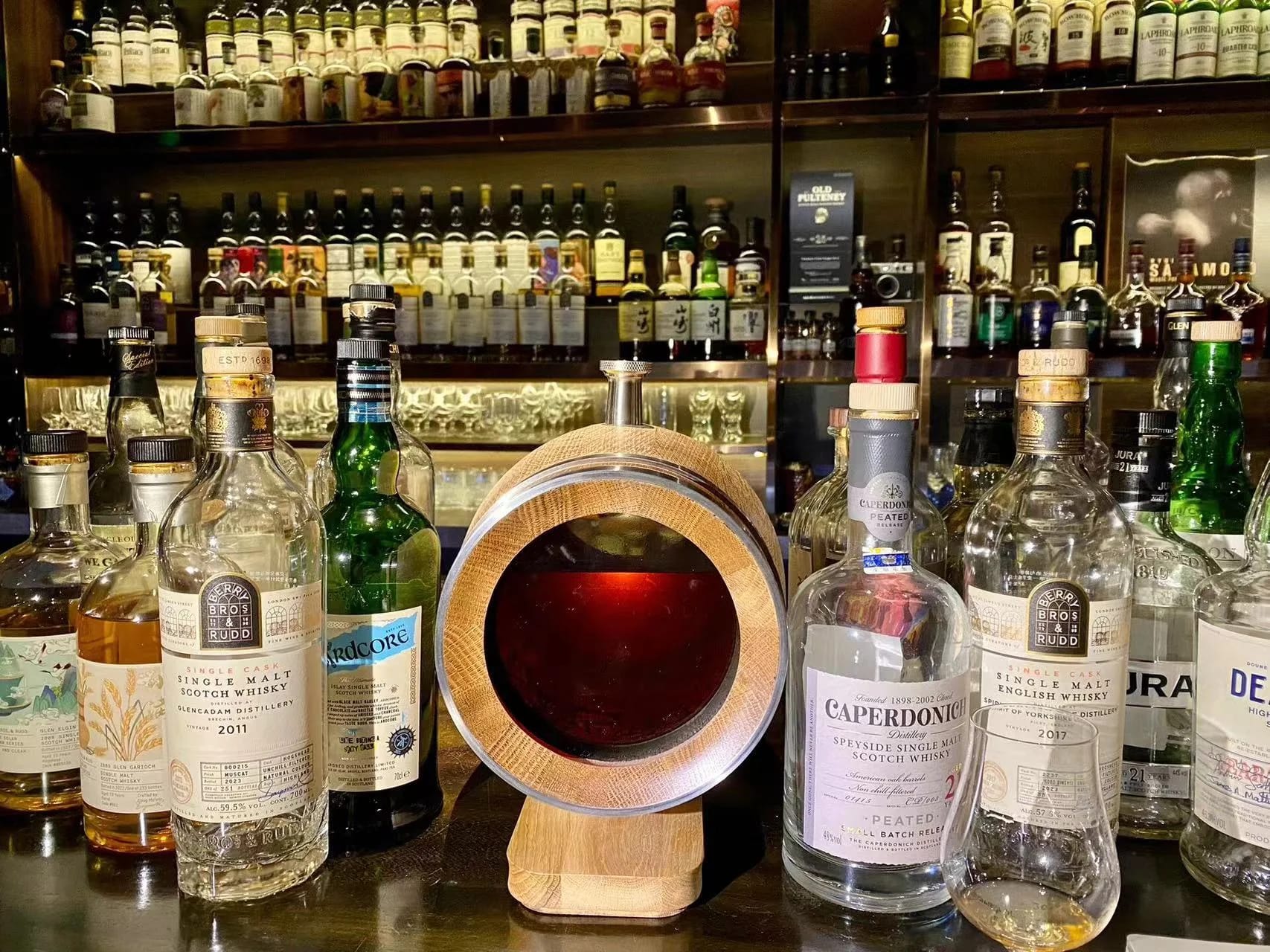
The glass provides a view of the liquid level and appearance from the end of the barrel. In a tasting room or shop display, that can help visitors understand the relationship between the container and its contents without relying only on a label.
Think about the direction from which people will see it. An end-facing position emphasises the viewing panel, while a side view makes the oak body and bands more prominent. Product photographs from both angles are useful when planning a display.
Leave enough room to reach the opening and handle the product in accordance with its instructions. A shelf that accommodates the outline in a photograph may still provide too little clearance for everyday use.
What can the glass not tell you?
A clear view is not a measure of flavour or maturity. The appearance of a spirit cannot, by itself, establish that it has reached a particular taste, quality or stage of development. A glass panel makes observation possible; it does not supply those answers.
Colour also looks different under changing light, against different backgrounds and in photographs taken with different camera settings. If you keep visual records, use comparable conditions so the images are easier to interpret.
Avoid choosing a barrel on the strength of a dramatic colour photograph or a fixed promise about results. For an aging project, discuss the intended spirit and obtain guidance appropriate to the specific product and use.
Read interior treatment as a specification
Junhe lists customisable char levels from 1 to 4 for the 3L model. The chosen treatment should be confirmed in the quotation and sample specification rather than assumed from the exterior photograph.
Describe what you intend to put in the barrel and the purpose of the project when making an enquiry. That conversation is more useful than asking a viewing panel to demonstrate how the finished spirit will taste.
A char level is a production detail, not a guaranteed maturation schedule. Do not turn it into a promise of a fixed number of days or a specific flavour. Keep a record of the agreed material and interior treatment so future enquiries refer to the same configuration.
Confirm the complete configuration
Start by stating whether the barrel is intended for spirits aging, gifting or display. Then confirm the base, closure, fittings, accessories and packaging included in the quotation. Items placed beside a barrel in a styled photograph are not necessarily part of the supplied set.
Junhe’s website includes an optional dispenser in some 3L product imagery. If that accessory is relevant to your project, request it explicitly and confirm its inclusion. Apply the same approach to the gift box and any branded presentation materials.
Check the assembled footprint separately from the packed dimensions. If your main question is whether to choose a shallower decanter or a deeper barrel, see our 700ml decanter and 3L barrel buying guide for that comparison.
Ask for instructions before first use
Request instructions for preparation, filling, closure, cleaning and storage that match the glass-head design you are buying. Guidance written for another type of barrel may not account for its glass panels, fittings or assembly.
Do not assume that a soaking method or cleaning routine found elsewhere applies. Clarify any unanswered points before use, including handling of the glass components. If the barrel will be given to someone else, make sure the relevant instructions reach the recipient.
Questions to bring to your enquiry
- Which oak and interior char treatment are included?
- How many glass panels does this model have, and what is their specification?
- Which base, fittings, accessories and packaging are supplied?
- What preparation, use and care instructions accompany the product?
- Can a sample be reviewed in the space where it will be used or displayed?
These questions turn an appealing photograph into a clearer purchasing decision. To discuss a glass-head oak barrel for your project, contact Junhe with your intended use, quantity and presentation requirements.
Let’s create something for your brand.
Considering a product for your brand? Discuss an existing original design or a new idea with our design and manufacturing team.
Discuss Your Project